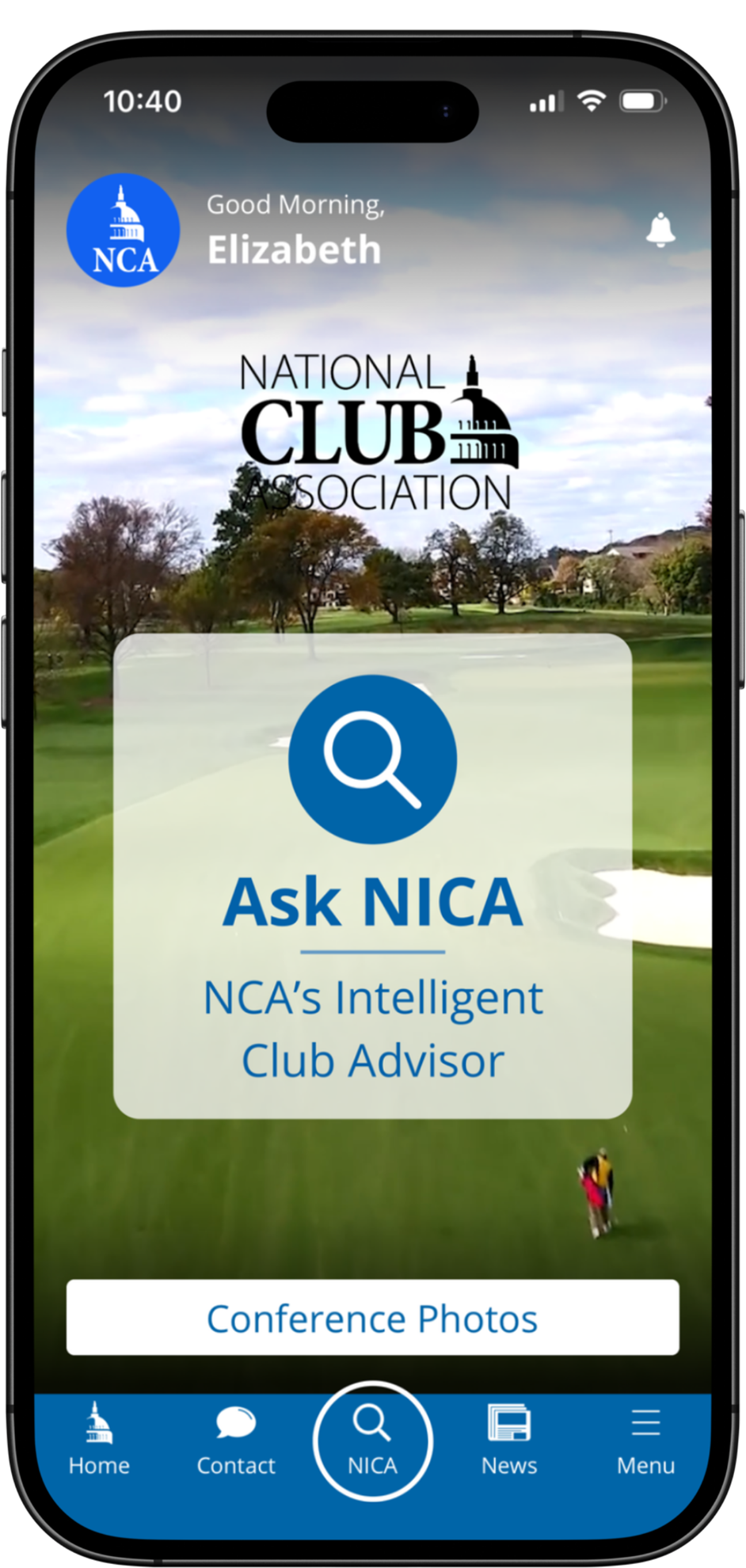
 An AI-powered feature backed by the knowledge of NCA's publications and resources-helping members quickly find guidance and industry insight.
Now available in the NCA app.
See NICA in Action
Below are a few sample questions, along with NICA's actual responses.
 Question:
We’re updating our guest policy. What questions should the board settle before staff drafts the details?

NICA's Response:
Before updating the guest policy, the board should address the following questions:
1. **Purpose and Objectives**:
- What is the primary purpose of updating the guest policy?
- How do the changes align with the club's mission and values?
2. **Scope and Limitations**:
- What types of guests will the policy cover (e.g., family, friends, business associates)?
- Are there any limitations on the number of guests a member can bring?
3. **Access and Privileges**:
- What facilities and services will guests have access to?
- Are there any restrictions on guest usage during peak times or events?
4. **Fees and Charges**:
- Will there be any fees associated with bringing guests?
- How will these fees be structured and communicated to members?
5. **Behavior and Conduct**:
- What behavior standards will guests be expected to adhere to?
- How will the club handle any violations of the guest policy?
6. **Communication and Implementation**:
- How will the new policy be communicated to members and staff?
- What training or resources will staff need to enforce the policy effectively?
7. **Feedback and Review**:
- How will the club gather feedback on the new policy from members and staff?
- What is the process for reviewing and updating the policy in the future?
Addressing these questions will help ensure that the guest policy is comprehensive, fair, and aligned with the club's overall goals.

Question:
My board is divided on an issue. How should I structure the conversation so we can evaluate it and move toward a decision?
NICA's Response: To structure a board conversation effectively and move toward a decision, consider the following approach:
1. **Pre-Meeting Preparation**:
- Distribute agenda materials well in advance to ensure all board members have sufficient time to review and prepare.
- Conduct a strategic issues survey to identify the most pressing issues, allowing you to start the conversation with clarity.
2. **Create Alignment**:
- Begin by establishing alignment on priorities before the meeting. This ensures that the conversation starts in the right place and captures every perspective.
3. **Structured Agenda**:
- Use a strategic agenda that allocates time to important issues, placing big-picture items at the beginning.
- Allow for spontaneous and informal discussions by occasionally suspending formal meeting rules.
4. **Encourage Participation**:
- Foster a collegial atmosphere where debate and collaborative decision-making are encouraged.
- Ensure that all board members participate in discussions and challenge them to think creatively.
5. **Focus on Key Questions**:
- Once priorities are clear, focus the conversation on key questions such as what actions need to be taken and what should come first.
6. **Decision-Making**:
- Use the meeting to turn conversations into actionable directions with clear next steps.
By following these steps, the board can effectively evaluate issues and progress toward making informed decisions.
 Question:
The board has decided to raise dues. Help me anticipate members’ concerns and plan a clear explanation of the decision.
NICA's Response: To anticipate members' concerns about the dues increase and plan a clear explanation, consider the following points:
1. **Understand Members' Concerns**:
- Members may worry about the value they receive for their dues. It's important to communicate how the increase will enhance their club experience.
- Rising costs, such as labor and energy, are common concerns. Highlight how these factors contribute to the need for a dues increase.
- Members might fear that dues are outpacing their perceived value. Address this by detailing improvements and benefits that justify the increase.
2. **Communicate the Rationale**:
- Clearly explain the reasons for the dues increase, such as inflation, enhanced services, and necessary capital improvements.
- Provide context about the financial pressures faced by the club, including increased operational costs and the need for maintaining high standards.
3. **Highlight Benefits and Improvements**:
- Detail specific improvements or projects funded by the dues increase, such as facility upgrades or new programs.
- Emphasize how the increase supports the club’s strategic goals and long-term sustainability.
4. **Engage with Members**:
- Offer opportunities for members to ask questions and provide feedback. This can help alleviate concerns and foster transparency.
- Consider implementing a phased approach to the increase, if possible, to ease the financial impact on members.
5. **Provide Assurance**:
- Reassure members that the board is committed to maintaining the club’s high standards and ensuring that their investment is worthwhile.
- Highlight the club’s efforts to remain competitive and relevant, ensuring members receive value for their dues.
By addressing these areas, you can help members understand the necessity of the dues increase and maintain their trust and satisfaction with the club.
 Question:
Our budget isn’t keeping pace with the club experience members expect. How should we evaluate a larger dues increase and discuss it with the board?
NICA's Response: To evaluate a larger dues increase and discuss it with the board, consider the following steps:
1. **Assess Financial Needs**:
- Evaluate the club's current financial situation, including operating costs, inflation impacts, and capital project needs.
- Determine the actual cost of delivering the expected member experience and how current dues fall short.
2. **Market Analysis**:
- Conduct a market analysis to understand how your dues compare to similar clubs in your area.
- Consider both inflationary pressures and market conditions when determining the appropriate increase.
3. **Member Input**:
- Gather feedback from members through surveys to understand their willingness to support a dues increase.
- Use this feedback to align the dues increase with member expectations and priorities.
4. **Strategic Alignment**:
- Ensure that the proposed dues increase aligns with the club’s long-term strategic goals and mission.
- Clearly define how the additional revenue will be used to enhance member services and facilities.
5. **Communication Plan**:
- Develop a clear communication strategy to explain the necessity of the dues increase to members.
- Highlight the benefits of the increase, such as improved facilities and services, to gain member support.
6. **Board Discussion**:
- Present detailed financial projections and member feedback to the board.
- Encourage open discussion and address any concerns or questions board members may have.
7. **Implementation**:
- Once approved, implement the dues increase with transparency and keep members informed throughout the process.
By following these steps, you can effectively evaluate and communicate a larger dues increase, ensuring alignment with both board expectations and member satisfaction.
Ready to Put NCA's Trusted Knowledge to Work?
Give it a try today! Ask NICA your next club leadership question.
Open the NCA app, tap the NICA icon in the bottom menu, select Ask the Advisor and simply type your question. In seconds, you'll receive guidance and insight you can trust.
Don't have the NCA app? Download it today and sign in using the same username and password you use to access the NCA website.